Handcrafted in USA Handcrafted in USA
| PRICE | $199.00 |
|---|---|
| AVG. LEAD TIME This is the estimated/average time required to get this product ready and/or shipped. Please note that timing may be faster when picked up at our Hilbert showroom. | |

Distributed by Smoky Lake
Your Partner in Maple

Tested and Approved
Description
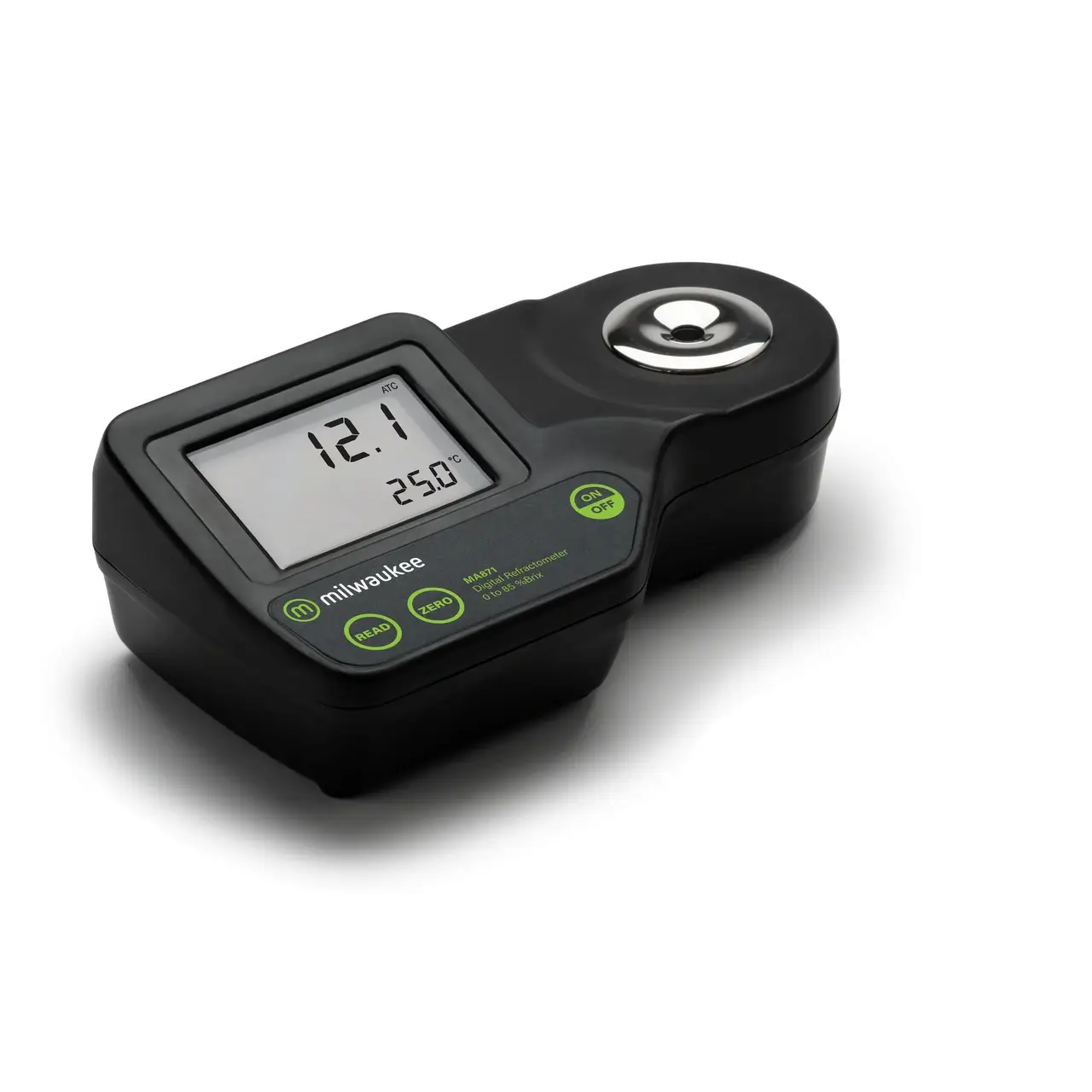
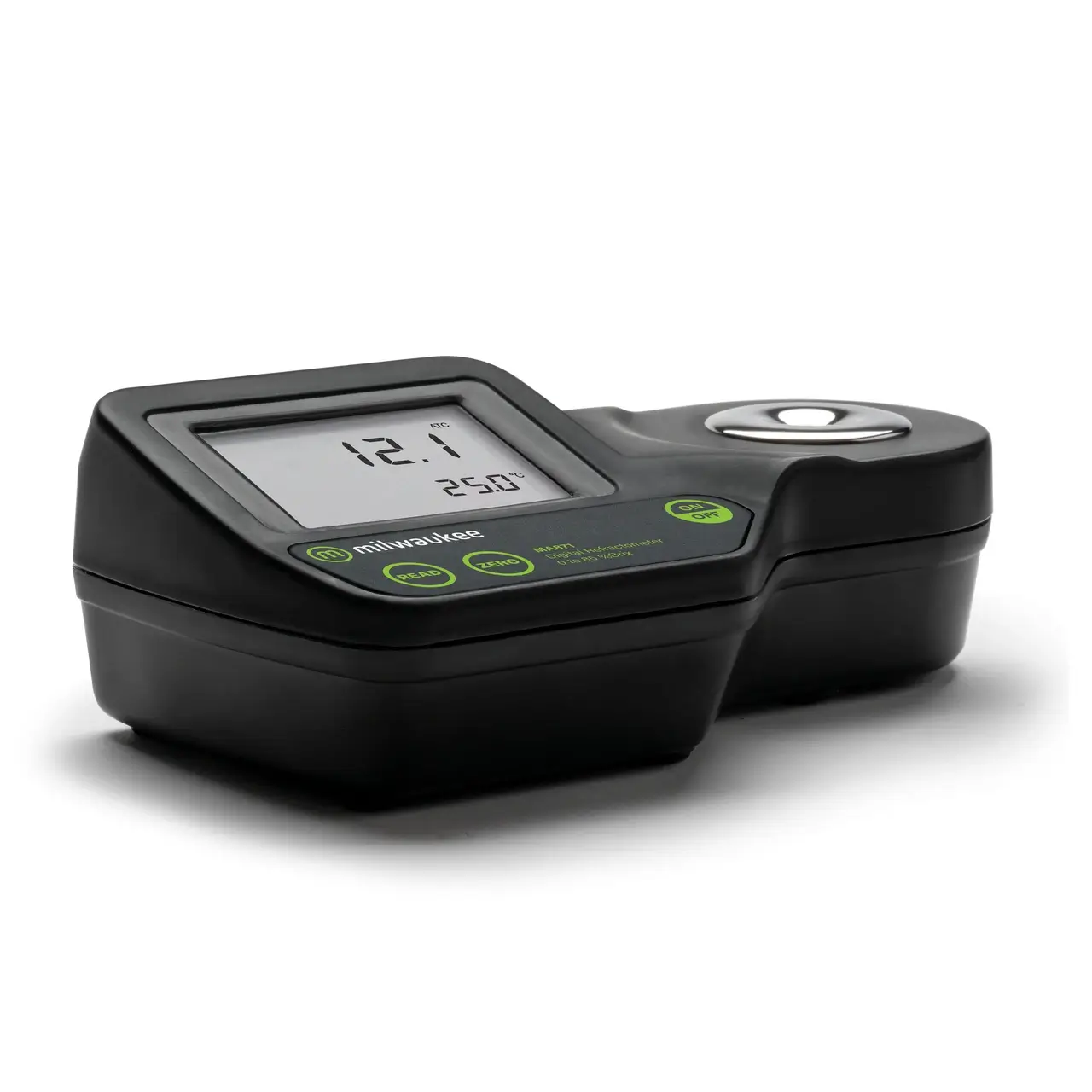
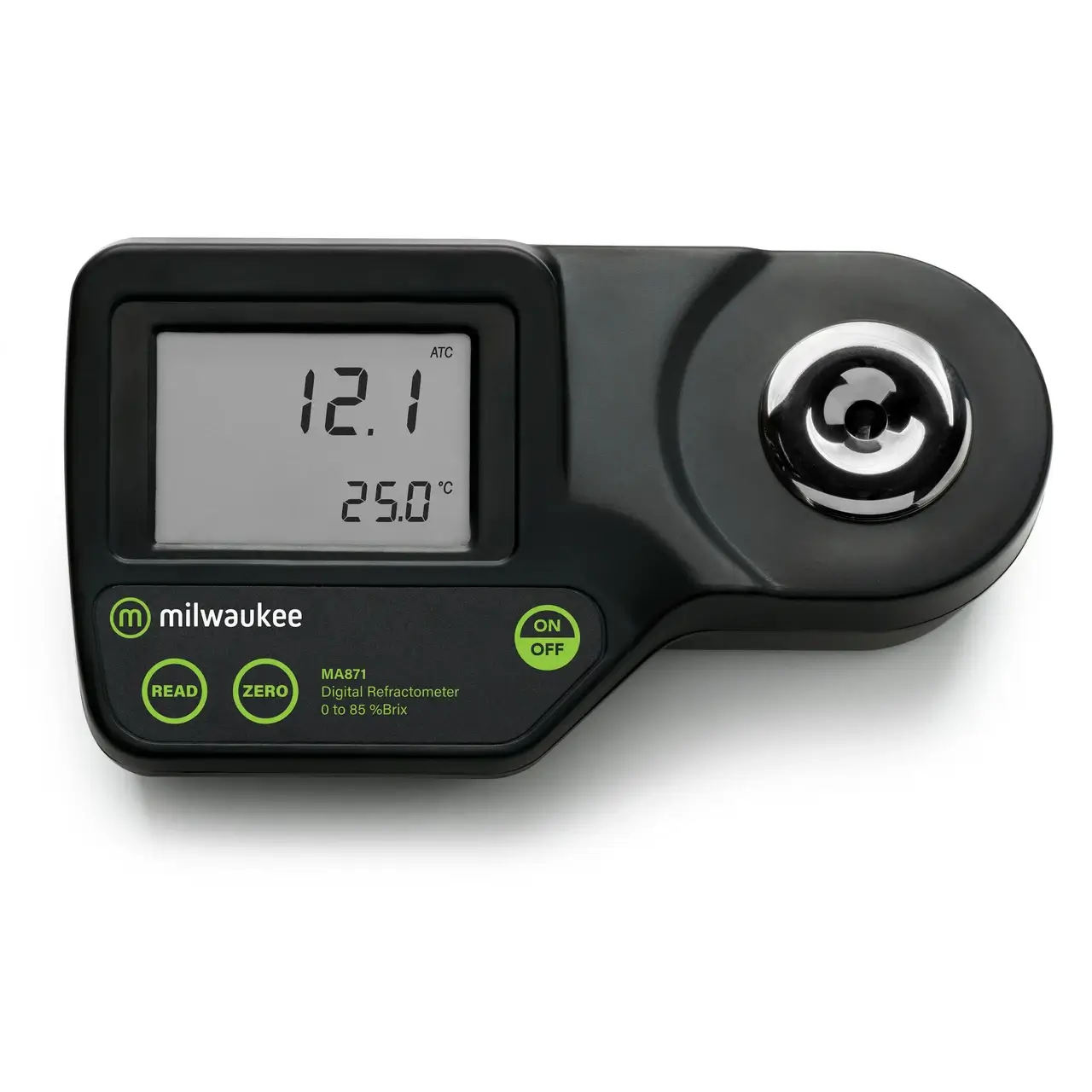
The Milwaukee MA871 digital Brix refractometer measures the refractive index of a sample and converts it to percent Brix (sucrose by weight) using methodology from the ICUMSA Methods Book, the internationally recognized reference for sugar analysis. For maple producers, one instrument covers sap, RO concentrate, and finished syrup across its full 0–85% Brix range, with ±0.2% Brix accuracy. It’s the maple syrup refractometer we recommend for producers who want readings they can trust at bottling time.
A hydrometer only reads correctly if you know the syrup’s temperature. The MA871 needs just a couple of drops, measures in about 1.5 seconds, and shows the sample temperature on the same screen as the Brix reading. Density matters: a University of Vermont Extension survey found nearly 1 in 4 maple syrups purchased online fell below the minimum density standard. Syrup that is too thin can ferment, and syrup that is too heavy can crystallize in the container.
One-point calibration
Small sample size
Automatic Temperature Compensation (ATC)
Quick, accurate results
Dual-level LCD
Stainless steel sample well
Battery indicators
Automatic shut-off
IP65 water resistant protection
Helpful error codes
| Brix Range | 0 to 85% Brix |
|---|---|
| Brix Resolution | 0.1% Brix |
| Brix Accuracy | ±0.2% Brix |
| Temperature Range | 0 to 80°C (32 to 176°F) |
| Temperature Resolution | 0.1°C (0.1°F) |
| Temperature Accuracy | ±0.3°C (±0.5°F) |
| Temperature Compensation | Automatic between 10 and 40°C (50 to 104°F) |
| Measurement Time | Approximately 1.5 seconds |
| Minimum Sample Volume | 100 μL, about 2 drops (must fully cover prism) |
| Light Source | Yellow LED |
| Sample Cell | Stainless steel ring and flint glass prism |
| Methodology | ICUMSA Methods Book (sucrose, % by weight) |
| Display | Dual-level LCD, °F/°C selectable |
| Auto-off | After 3 minutes of non-use |
| Enclosure Rating | IP65, ABS housing |
| Battery Type / Life | 9V / approximately 5,000 readings |
| Dimensions / Weight | 192 x 102 x 67 mm (7.6 x 4.0 x 2.6″) / 420 g (14.8 oz.) |
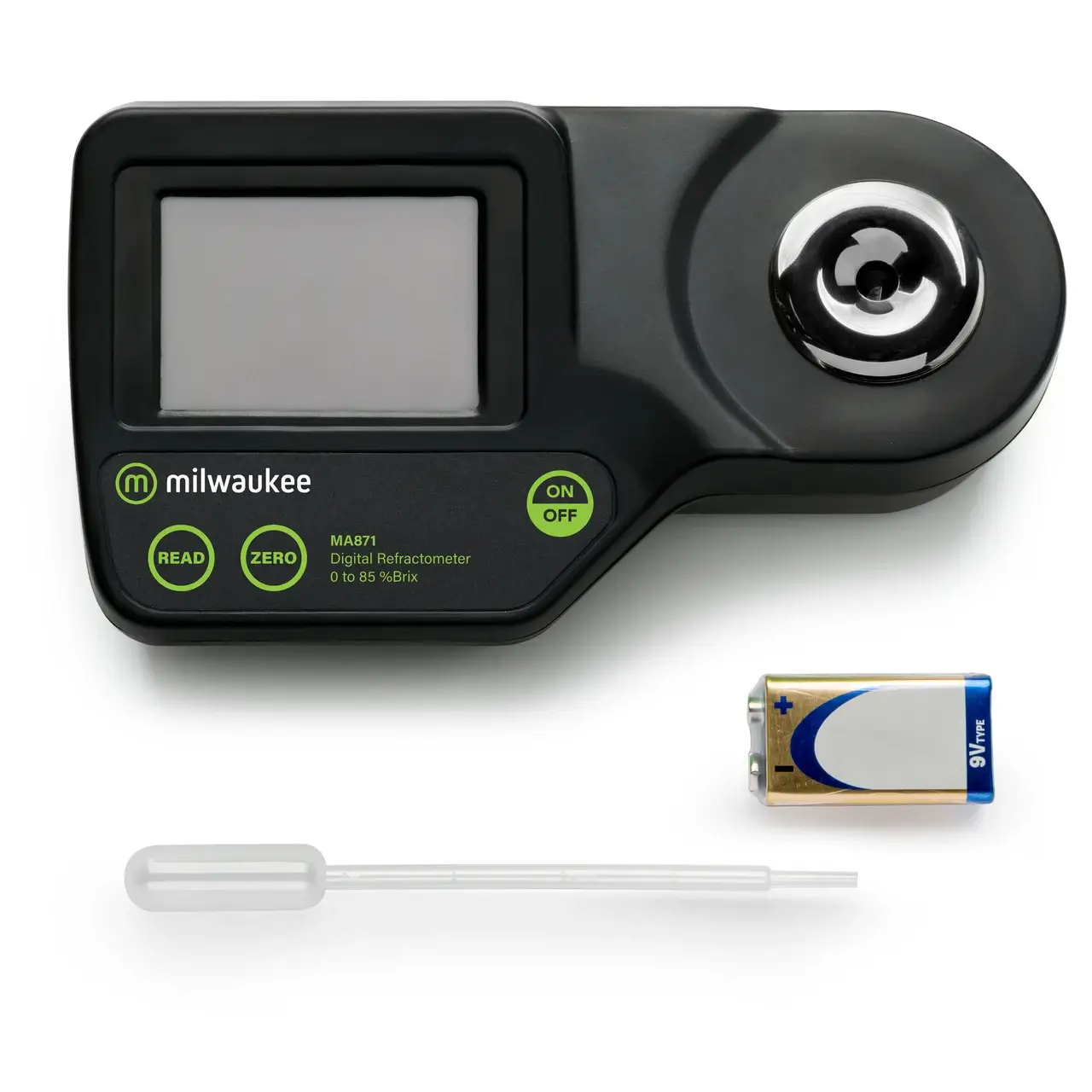
| In the Box | MA871 refractometer, distilled water for calibration, pipette, 9V battery, instrument quality certificate, instruction manual |
| Warranty | 2 years |
To make a standard % Brix solution, follow the procedure below:
Example to prepare a 25% Brix solution:
| % Brix | Sucrose (g) | Water (g) | Total (g) |
| 25 | 25.000 | 75.000 | 100.000 |
Automatic temperature compensation works between 50 and 104°F (10–40°C). The meter displays sample temperature from 32 to 176°F, but outside the 50–104°F window the ATC icon blinks and the reading is not compensated. For syrup straight off the evaporator or filter press, let a small sample cool before testing. If the sample is much warmer or cooler than the meter, wait about one minute after placing it in the well before pressing READ. Do not put boiling syrup directly on the prism.
Light from a yellow LED passes through a flint glass prism in contact with the sample. A linear image sensor finds the critical angle where light stops refracting into the sample, which gives the sample’s refractive index. A built-in temperature sensor feeds the compensation algorithm, and the meter converts the result to % Brix.
Tutorials and Tips
| PRICE | $199.00 |
|---|---|
| AVG. LEAD TIME This is the estimated/average time required to get this product ready and/or shipped. Please note that timing may be faster when picked up at our Hilbert showroom. | |
Check maple sap, RO concentrate, and finished syrup in seconds. The Milwaukee MA871 gives you a digital % Brix reading from just two drops, with sample temperature shown right next to it. No hydrometer cup and no hot-test guesswork.
Zero it with the included distilled water, add your sample, and press READ. Readings are automatically temperature compensated between 50–104°F, and the sealed stainless steel well wipes clean between samples.
INCLUDES:
Description
The Milwaukee MA871 digital Brix refractometer measures the refractive index of a sample and converts it to percent Brix (sucrose by weight) using methodology from the ICUMSA Methods Book, the internationally recognized reference for sugar analysis. For maple producers, one instrument covers sap, RO concentrate, and finished syrup across its full 0–85% Brix range, with ±0.2% Brix accuracy. It’s the maple syrup refractometer we recommend for producers who want readings they can trust at bottling time.
A hydrometer only reads correctly if you know the syrup’s temperature. The MA871 needs just a couple of drops, measures in about 1.5 seconds, and shows the sample temperature on the same screen as the Brix reading. Density matters: a University of Vermont Extension survey found nearly 1 in 4 maple syrups purchased online fell below the minimum density standard. Syrup that is too thin can ferment, and syrup that is too heavy can crystallize in the container.
One-point calibration
Small sample size
Automatic Temperature Compensation (ATC)
Quick, accurate results
Dual-level LCD
Stainless steel sample well
Battery indicators
Automatic shut-off
IP65 water resistant protection
Helpful error codes
| Brix Range | 0 to 85% Brix |
|---|---|
| Brix Resolution | 0.1% Brix |
| Brix Accuracy | ±0.2% Brix |
| Temperature Range | 0 to 80°C (32 to 176°F) |
| Temperature Resolution | 0.1°C (0.1°F) |
| Temperature Accuracy | ±0.3°C (±0.5°F) |
| Temperature Compensation | Automatic between 10 and 40°C (50 to 104°F) |
| Measurement Time | Approximately 1.5 seconds |
| Minimum Sample Volume | 100 μL, about 2 drops (must fully cover prism) |
| Light Source | Yellow LED |
| Sample Cell | Stainless steel ring and flint glass prism |
| Methodology | ICUMSA Methods Book (sucrose, % by weight) |
| Display | Dual-level LCD, °F/°C selectable |
| Auto-off | After 3 minutes of non-use |
| Enclosure Rating | IP65, ABS housing |
| Battery Type / Life | 9V / approximately 5,000 readings |
| Dimensions / Weight | 192 x 102 x 67 mm (7.6 x 4.0 x 2.6″) / 420 g (14.8 oz.) |
| In the Box | MA871 refractometer, distilled water for calibration, pipette, 9V battery, instrument quality certificate, instruction manual |
| Warranty | 2 years |
To make a standard % Brix solution, follow the procedure below:
Example to prepare a 25% Brix solution:
| % Brix | Sucrose (g) | Water (g) | Total (g) |
| 25 | 25.000 | 75.000 | 100.000 |
Automatic temperature compensation works between 50 and 104°F (10–40°C). The meter displays sample temperature from 32 to 176°F, but outside the 50–104°F window the ATC icon blinks and the reading is not compensated. For syrup straight off the evaporator or filter press, let a small sample cool before testing. If the sample is much warmer or cooler than the meter, wait about one minute after placing it in the well before pressing READ. Do not put boiling syrup directly on the prism.
Light from a yellow LED passes through a flint glass prism in contact with the sample. A linear image sensor finds the critical angle where light stops refracting into the sample, which gives the sample’s refractive index. A built-in temperature sensor feeds the compensation algorithm, and the meter converts the result to % Brix.
Tutorials and Tips
Take advantage of our online resource library, 24/7. You’ll find illustrated instruction guides, videos, and a full range of maple topics!