
Happy Veteran’s Day, Doug Ellis
READ MORE
 Handcrafted in USA
 When maple season begins to wind down, most producers pack away their gear and call it a year. But for Jake Dudley, the adventure continues. By turning to birch trees, Jake not only extends his sugaring season but also creates a unique, high-value product — all while using the very same equipment designed for maple.

Jake first stepped into the world of birch syrup when a friend, Bill Schiller, invited him to help out in the woods. “Spending time in the woods is #1,” Jake says, reflecting on how quickly the pursuit took root. Bill, an inventive producer already experimenting with air injection and the slower evaporation process birch requires, became Jake’s mentor and collaborator.
For maple producers, birch offers a seamless transition. The tapping season begins just as maple winds down, and the same evaporators, ROs, and bottlers can be put to use. “It works great for a maple producer,” Jake explains. “We get to make a secondary product with all the same equipment.”
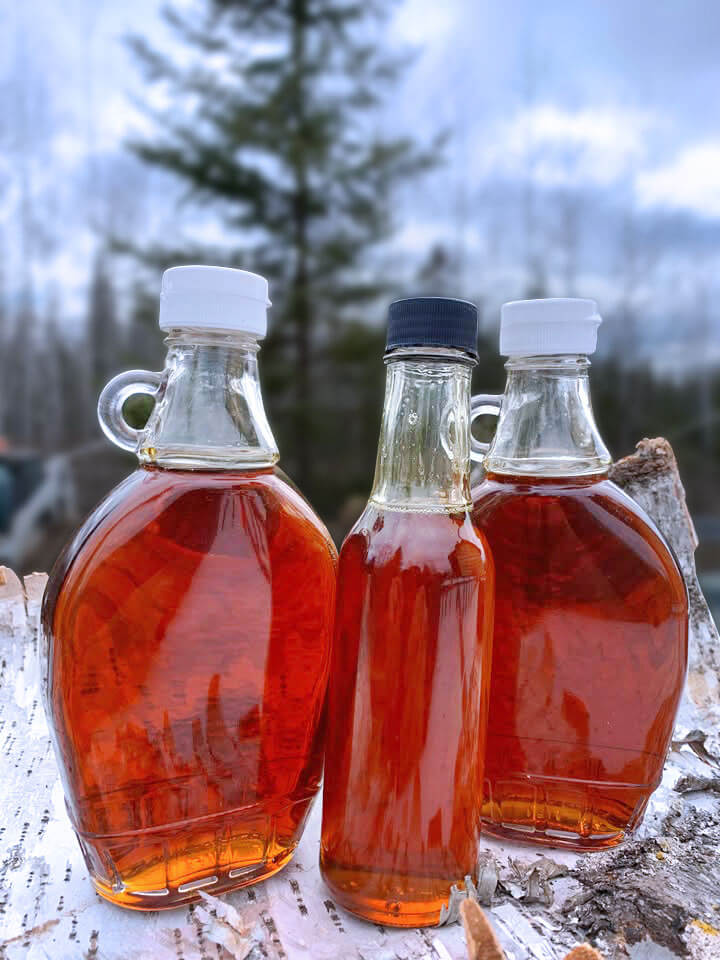
With a sugar content far lower than maple (0.5 – 1% sugar on average), it takes about 120–150 gallons of sap to make a single gallon of syrup (compared to maple’s 40:1 ratio). Careful handling is critical. “The fructose can burn at typical maple finishing temps,” Jake warns, noting that he and his crew keep the sap below 200°F and rely on air injection for quality control.
The payoff is extraordinary. Jake describes properly finished birch syrup as having subtle but complex notes — balsamic, sorghum, citrus, teriyaki, cherry — all layered into a bold, unforgettable profile. (Poorly made birch, by contrast, leaves a harsh burnt aftertaste.)
What surprised Jake most was the sap itself. “I call birch sap liquid silk,” he says. “It is a joy to drink and very refreshing.” While the flavor turns unpleasant during RO and boiling, it “comes back to life” as it nears syrup, a transformation that continues to fascinate him season after season.
Once bottled, birch syrup shines in the kitchen. Jake uses it as a substitute in Asian sauces, drizzled over salmon, blended into salad dressings, or caramelized with Brussels sprouts. Its bold, savory-sweet character opens doors to culinary creativity.
For sugarmakers curious about making birch syrup for themselves, Jake has three great tips:

For Jake, birch is both a natural complement to maple and a pursuit all its own. “The equipment is identical, and it’s another tree syrup,” he says. “But the consumer is totally different.”
By embracing birch, Jake is really taking advantage of what nature has to offer. If you are seeking ways to extend your maple season, exploring birch just might be the answer!