
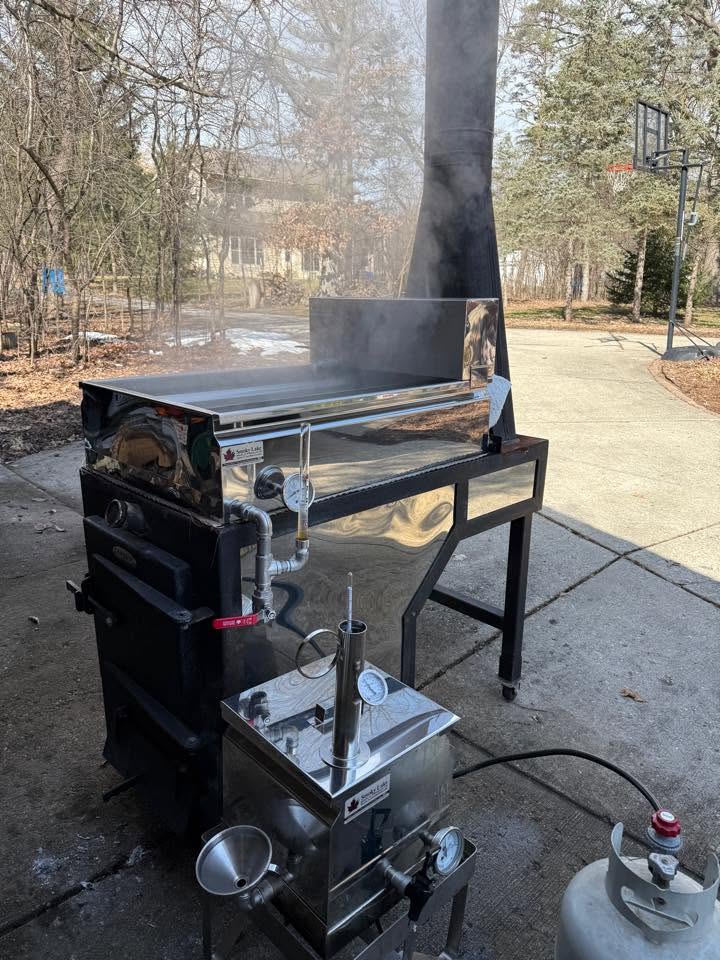
How to Design a Sugarhouse Cupola for Better Steam Ventilation
READ MORE
 Handcrafted in USA
At the beginning of the season, there’s a point when the fire is going, sap is flowing, and you’re waiting for the evaporator to really get into its rhythm. Sugarmakers call it “sweetening the pan.”
Sweetening the pan is the first boil of the season, when the sap in your evaporator concentrates enough for the back end of the pan to reach syrup density. Until that happens, you’re not drawing off syrup. You’re building up to it.
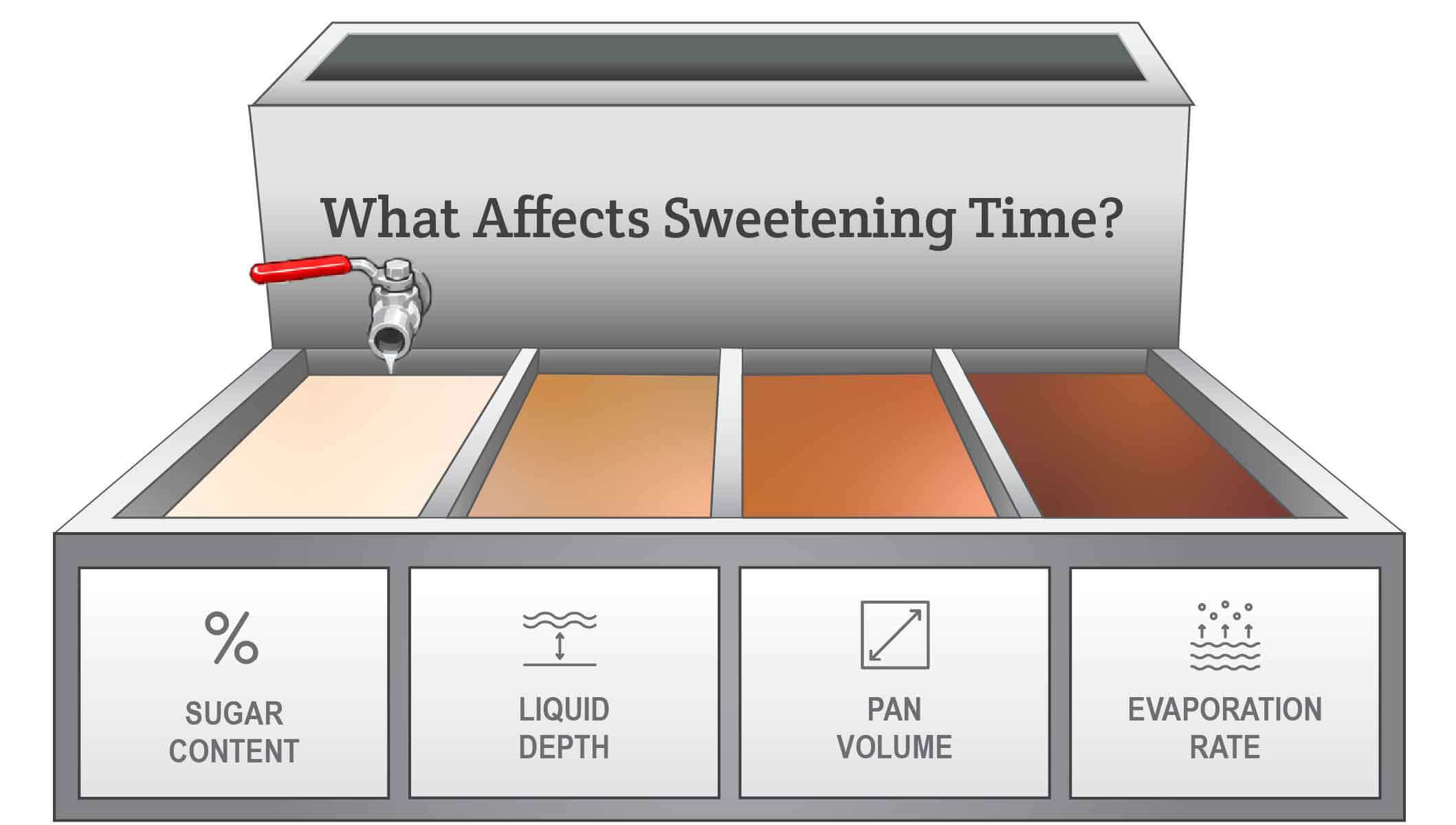
How long it takes to sweeten the pan comes down to four things:
That’s why one producer might tell you his pan sweetened in two hours, while yours is still working toward syrup density. For some sugarmakers, sweetening takes most of the first day of boiling, or all of it. Because those four factors vary from one sugarhouse to the next, two perfectly good setups can give you very different results.
This is one variable you don’t have much control over: what’s coming into the evaporator. Mother nature sets the sugar content of the sap, and it can vary from season to season, throughout the same season and even between different types of maple trees.
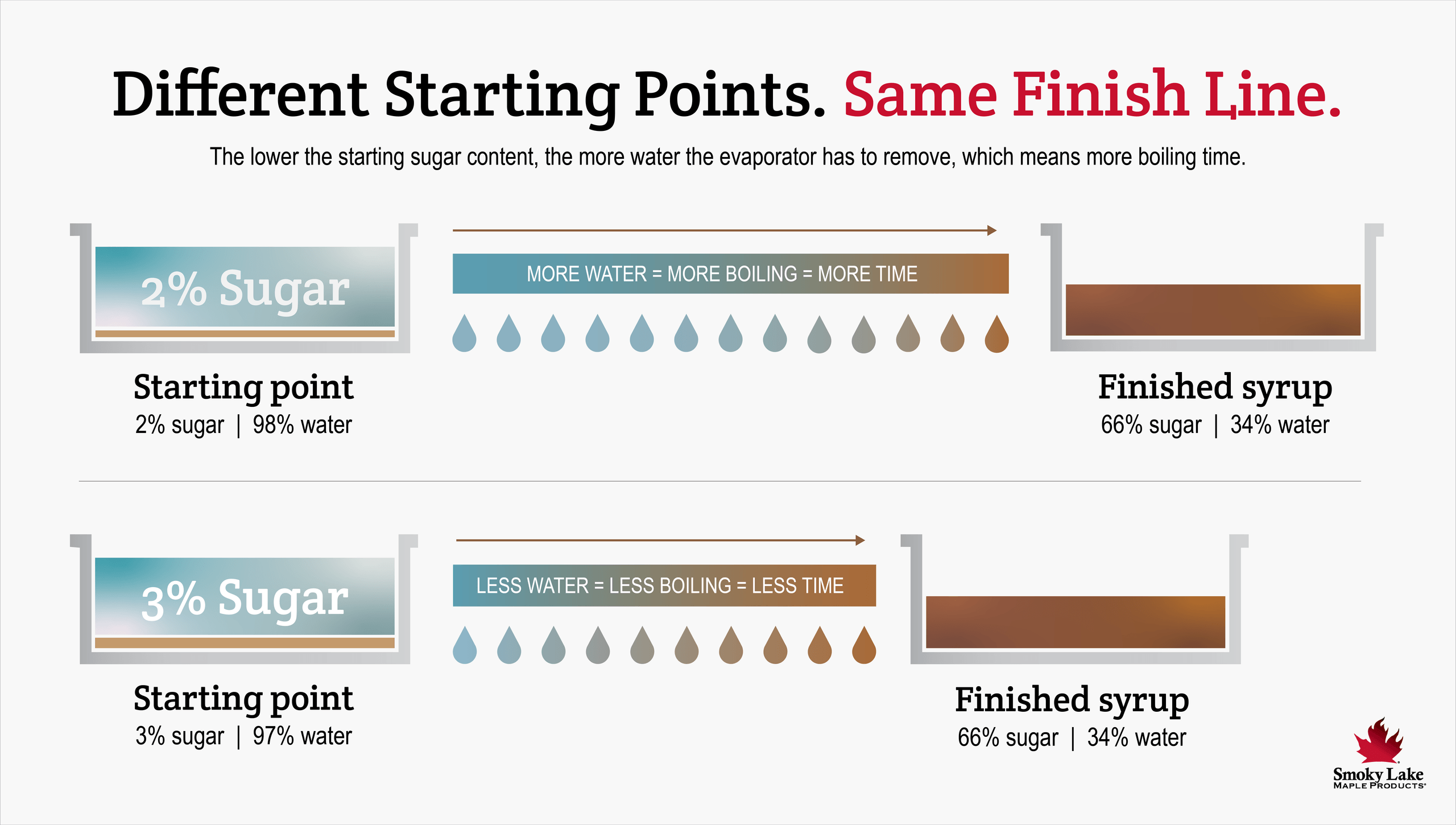
Maple sap can vary quite a bit in sugar content. If one producer is starting with 1.5% sap and another is starting with 2.5% or 3%, they’re not asking their evaporators to do exactly the same job.
The lower the starting sugar content, the more water has to be removed before that sap reaches syrup density. A sap hydrometer is a simple way to measure the sugar content of the sap coming from your trees.
That’s especially important during sweetening. At the beginning, the evaporator is filled with sap at roughly the same concentration. As water boils away and fresh sap continues to enter the system, the sap becomes progressively more concentrated from one end of the system to the other. A vigorous boil and a consistent stream of incoming sap help build and maintain that sugar gradient as the evaporator runs.
Starting with higher-sugar sap means there’s less water to remove as that gradient develops. And because the sugar content of your sap can change throughout the season, your sweetening time can change right along with it.
The amount of liquid in the evaporator matters, too.
A greater volume of sap means more liquid has to be heated and concentrated as it moves through the boiling system. But liquid depth isn’t just a matter of putting more sap in the pan. An evaporator is designed to operate at a certain depth, and maintaining that depth is an important part of keeping the system running properly.
We recommend starting at a 2-inch liquid depth. As sugarmakers gain experience with their evaporator and learn how it runs, they may choose to reduce that depth in small increments. This is also where the feed system comes into play.
A feed pan or float box helps regulate the flow of raw sap into the evaporator as sap is boiled off. The goal is to maintain a consistent liquid level rather than allowing the depth to swing between too much and too little.
A sight glass gives you an easy way to monitor the liquid depth in the pan without having to look into the pan through the hot steam coming off the evaporator.
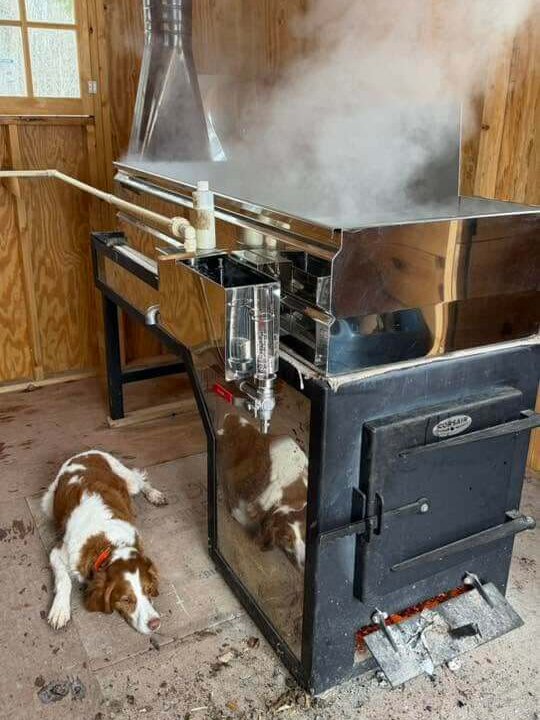
A larger evaporator will generally hold more liquid at the same operating depth, which means there’s more sap in the system that has to go through the concentration process. How much liquid the system is carrying, along with how quickly it’s boiling, can affect how long it takes to sweeten.
Pan configuration matters, too. Different configurations can hold different amounts of liquid and create different paths for that liquid as it moves through the boiling system. The number of compartments can also affect the strength of the sugar gradient. More compartments create additional separation between stages of the boil, allowing for a greater difference in sugar concentration from one part of the system to the next.
Two pans with the same footprint can have different liquid capacities depending on their design. That’s one reason pan dimensions alone don’t tell you everything about how long an evaporator will take to sweeten. So if someone says, “My pan sweetens in 90 minutes,” the number doesn’t tell you much on its own. How much liquid their system holds and how that liquid moves through it are both part of the story.
Now we get to the other side of the equation: how quickly the evaporator can remove water.
The faster an evaporator removes water, the faster it can concentrate the sap that’s in the pan. This is where the arch becomes important. The arch, firebox and pan work together to transfer heat from the fire into the boiling system. Their design affects how that heat is used and, ultimately, how much water the evaporator can remove.
That’s worth keeping in mind when comparing Smoky Lake evaporators like the StarCat, Dauntless and Corsair. They share many of the same design fundamentals, but there are differences in their arches and fireboxes. Those differences, along with the size and pan configuration of the evaporator, can affect its overall evaporation rate.
Pan design plays a role as well. Flat, divided, hybrid and flue pan sets all transfer heat from the fire into the sap, but their designs affect how that heat is transferred and how the sap moves through the pan. This is where heating surface area becomes important.
While pan volume refers to how much liquid a pan holds, heating surface area refers to the surfaces available to transfer heat into the liquid. Both matter, but they affect the boiling process in different ways. A flat pan receives heat primarily across its bottom surface, while divided pans create channels that guide the sap through the pan. Hybrid and flue pan sets add even more heat-transfer surface area by extending flues into the sap. That additional surface area can make a significant difference. For example, a smaller pan equipped with flues can have more heating surface area than a much larger flat pan.
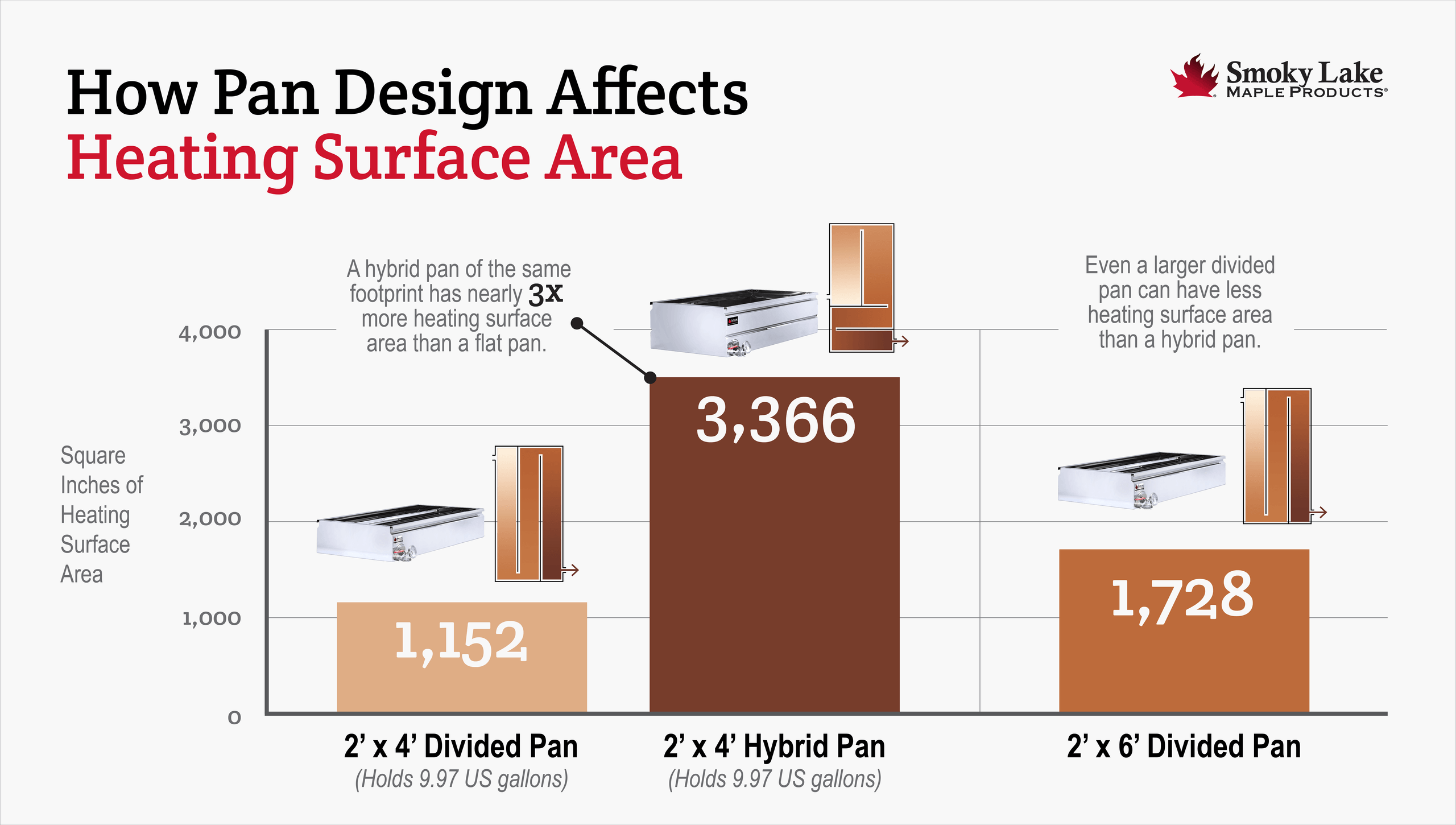
However, more heating surface area doesn’t automatically mean a proportionally higher evaporation rate. How effectively that surface area transfers heat depends on the design and operation of the entire evaporator.
Draft is another part of this. Natural draft draws combustion air through the fire as hot gases rise and exit through the stack pipe. Forced draft actively supplies additional combustion air, allowing the fire to burn more intensely and potentially increasing the rate at which heat is released from the firewood and transferred into the boiling system.
But forced draft isn’t a magic button. Evaporation rate ultimately comes from how the fire (fuel), arch, pan and draft work together. Forced draft can increase your boil rate by allowing the firewood to release its available energy more quickly. It may also help compensate for some performance limitations associated with less-than-ideal firewood, although properly seasoned firewood remains important.
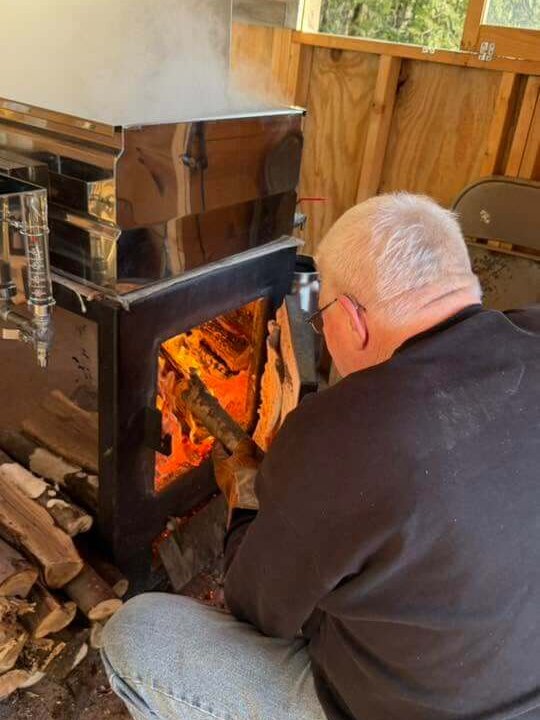
So what is actually happening while you’re waiting for the pan to sweeten?
At the beginning of the boil, the evaporator is essentially filled with sap that’s at a relatively similar sugar concentration. As water is removed, the sap becomes progressively more concentrated as it moves through the system.
Eventually, you have a gradient:
Lower sugar concentration → higher sugar concentration → finished syrup
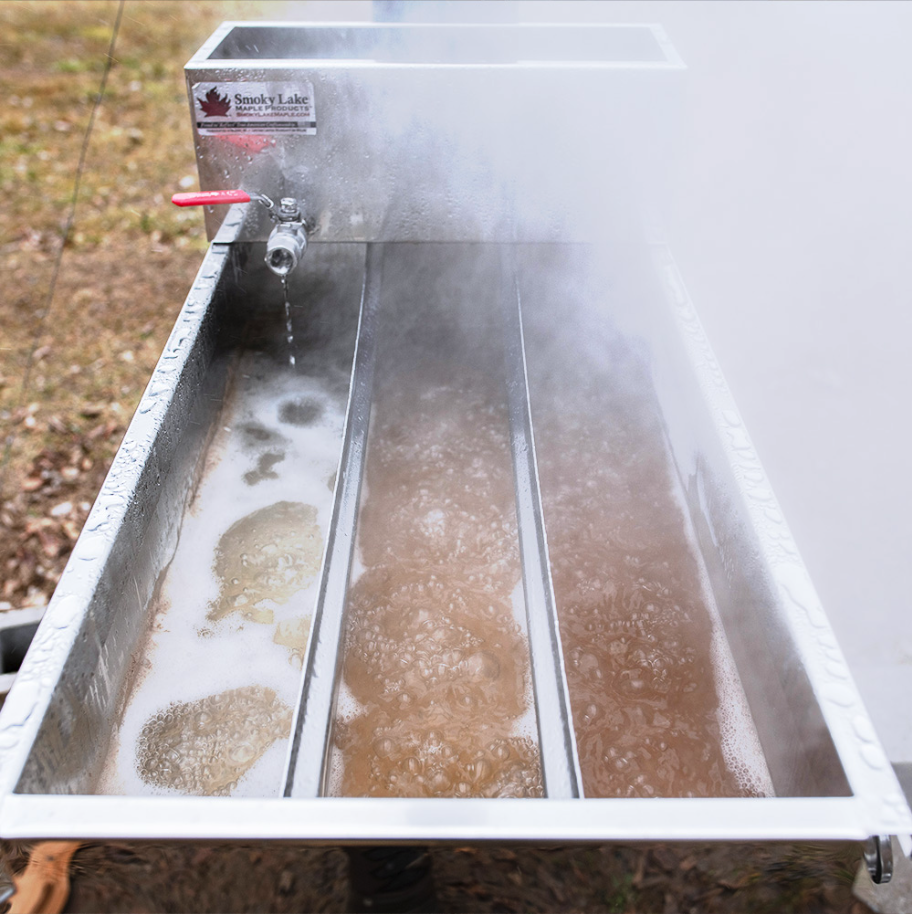
The rate at which that gradient develops depends on how quickly the system can remove water compared with the amount and concentration of liquid moving through it.
Everything we’ve covered plays a part in how quickly that gradient develops. Starting sugar content determines how much water needs to be removed. Liquid depth and pan volume influence how much sap the system carries. Pan configuration affects how that sap moves and concentrates, while evaporation rate determines how quickly water can be removed.
Two evaporators with similar dimensions, or even similar evaporation rates, may not sweeten in the same amount of time. That’s why sweetening isn’t really about a stopwatch. It’s about how all these factors work together.
That’s probably the question everyone wants a simple answer to.
There isn’t one.
And while that’s not a very satisfying answer, it’s also why comparing sweetening times between two operations can be misleading.
The more useful questions are:
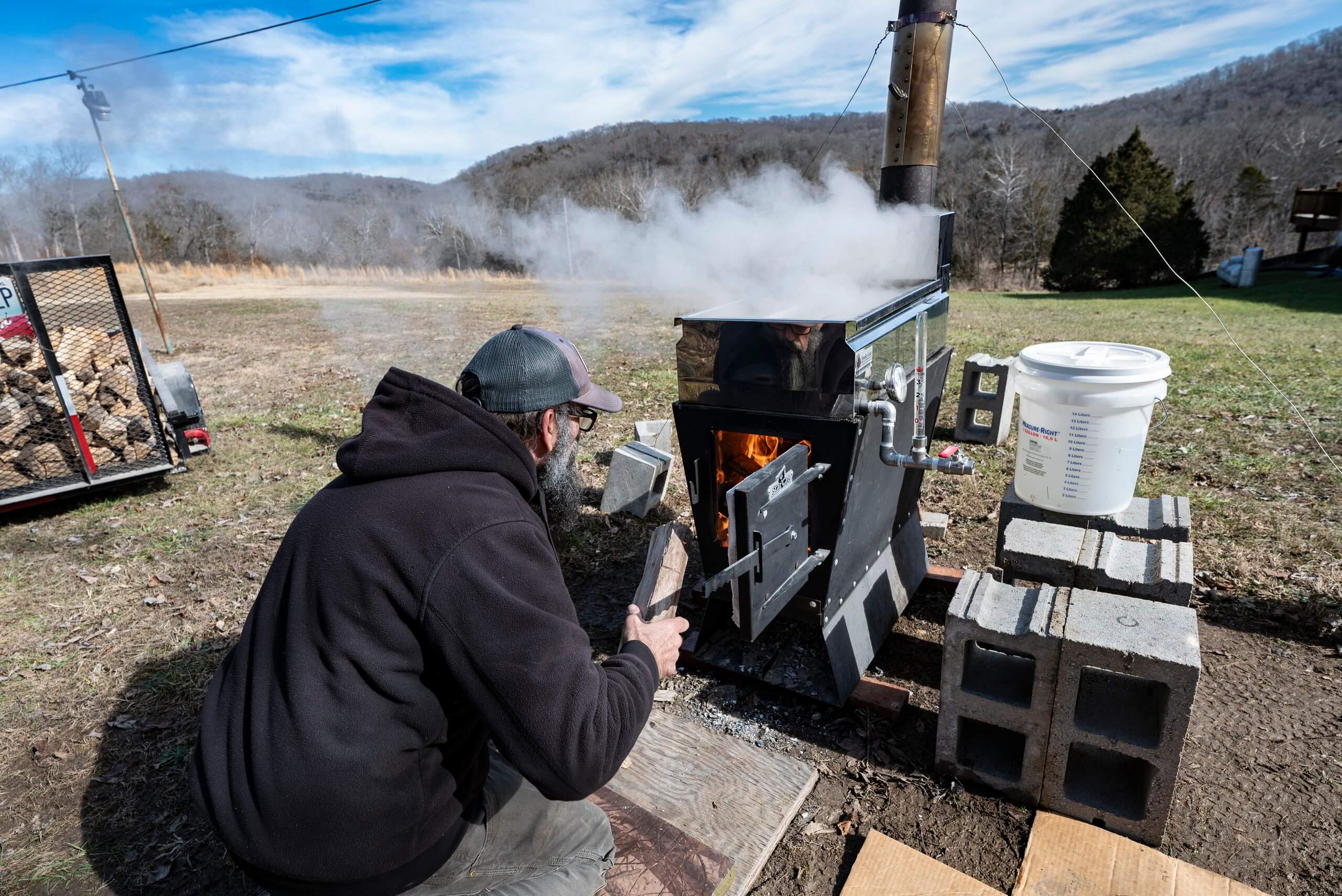
Once you look at those variables together, differences in sweetening time start to make a lot more sense.
A producer running a different evaporator isn’t necessarily doing anything differently or getting something wrong because their pan takes longer to sweeten. They may simply be working with a different combination of variables.
The interesting part isn’t how long someone else’s pan takes to sweeten. It’s understanding why yours takes the amount of time that it does. The more you learn about your sap, your pan and your fire, the better you’ll be able to predict, and shorten, your own sweetening time.
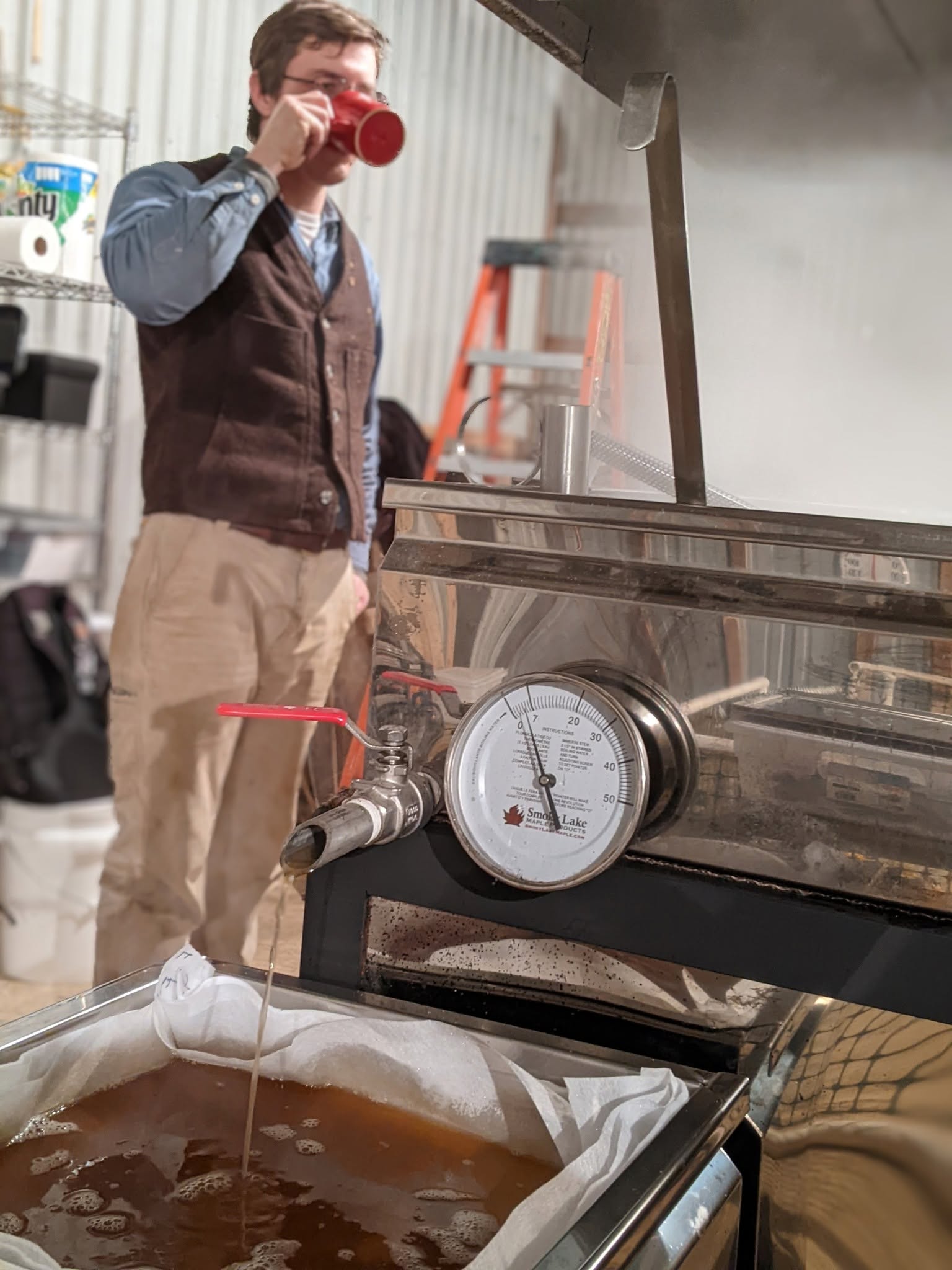
Sweetening the pan is the first boil of the season, when sap in the evaporator concentrates enough for the back end of the pan to reach syrup density. Until then, you’re building a sugar gradient across the pan rather than drawing off syrup.
There’s no single answer. Some producers sweeten in a couple of hours, while others take most or all of the first day of boiling. It depends on your sap’s sugar content, liquid depth, pan volume and configuration, and your evaporator’s evaporation rate.
You’re probably working with a different combination of variables, not doing anything wrong. Differences in sap sugar content, how much liquid the evaporator holds, pan design, and how the evaporator is fired can all change sweetening time, even between evaporators of similar size.
Lower-sugar sap has more water to boil off, so it takes longer to reach syrup density. A sap hydrometer lets you check your sap’s sugar content.
We recommend starting at a 2-inch liquid depth. As you get to know your evaporator, you may choose to reduce it in small increments. A feed pan or float box keeps the depth steady, and a sight glass lets you check it without looking through the steam.
Hybrid pans and flue pan sets have more heating surface area, which can increase evaporation rate. A 2′ x 4′ hybrid pan has nearly three times the heating surface area of a 2′ x 4′ divided pan. More surface area doesn’t automatically mean a proportionally faster boil, though, because the arch, firebox and draft all play a role.
It can. Forced draft supplies extra combustion air so the fire burns hotter, which can raise your boil rate. It works best alongside a well-designed arch and properly seasoned firewood.
Yes. Sap sugar content changes from season to season and even within the same season, so your sweetening time can shift with it.